
A reflection for the CASE Incubator Field Guide For Socially Engaged Practice
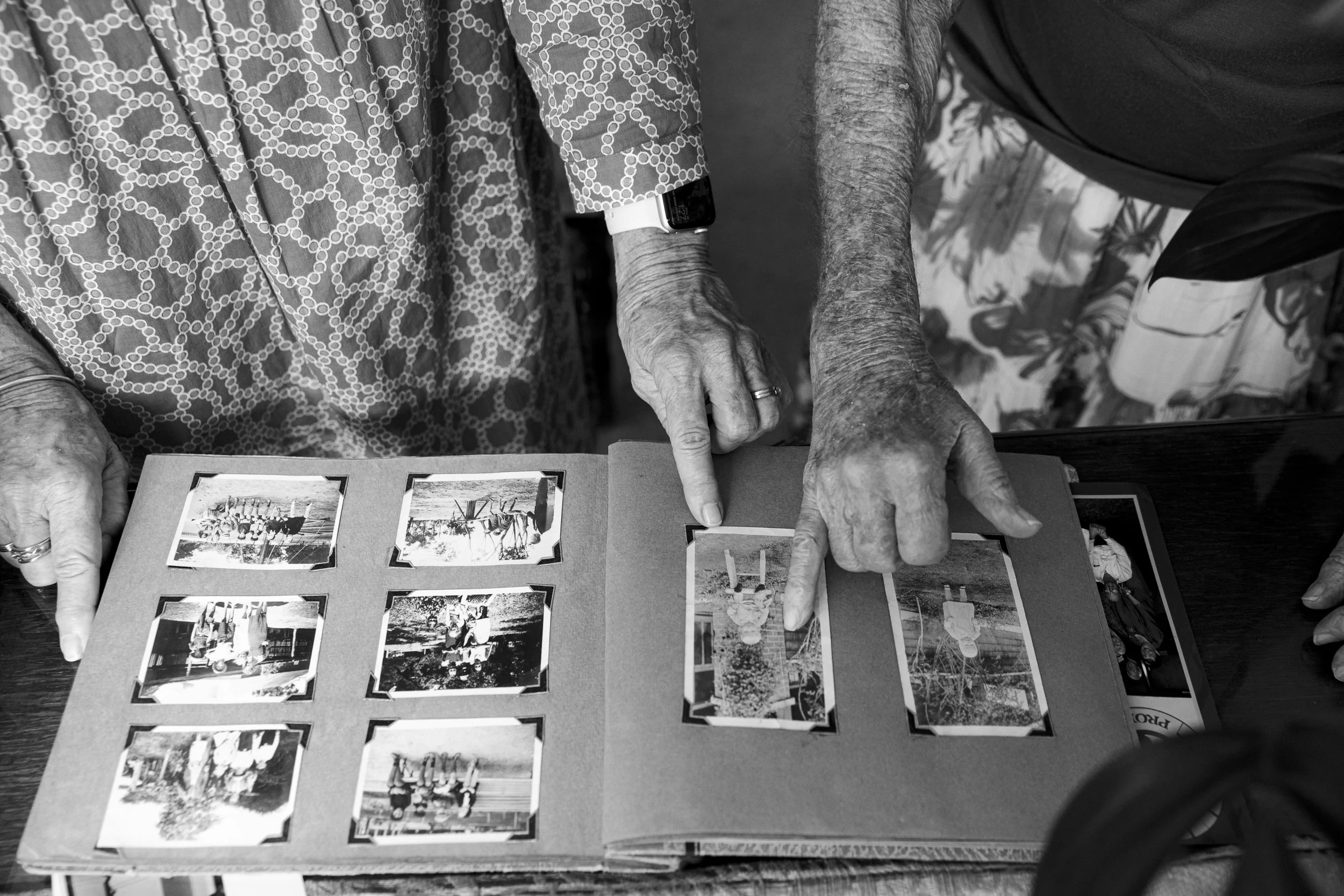
Looking at photographs together at Nancy’s table, Newcastle 2021.
At the heart of our socially engaged practice, there is a deep sense of care. Care for people, for place, for story, and for the process of creating spaces where those stories can be shared. It’s something we return to again and again in our work at And Then: the belief that stories are a powerful point of connection, and that when they are shared with care, they can open up understanding, shift perspectives, and sometimes leave us changed. We see the act of seeing another human in their experience as something powerful.
But something we’ve been learning over time is that care, on its own, is not enough to sustain a practice.
In fact, sometimes the very thing that makes us care can also make it difficult to know where to stop.
We have found ourselves asking this question again and again: what happens when the ethical impulse to care asks us to do more than the work can hold?
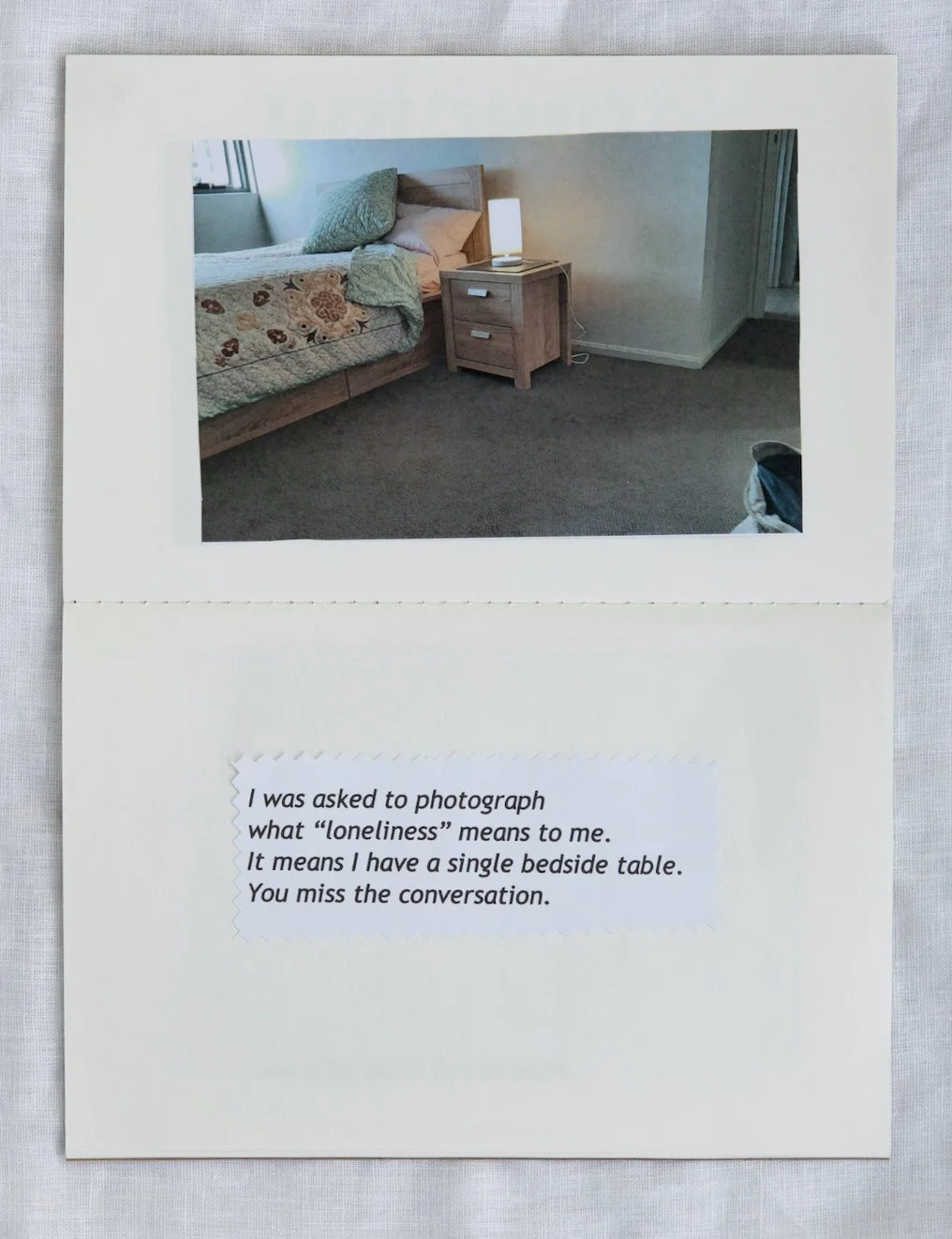
A page from Maree’s journal, created during her collaboration with And Then. Newcastle, 2021.
In our early years of running And Then, we found it very easy to say yes. Yes to opportunities that felt meaningful and hard-won, yes to expanding what a project could be, and often a huge yes to going a little (or a lot) further in everything we did.
We wanted to do everything we could to honour the people and stories we were working with, while also feeling the pressure to demonstrate the value of the work to those funding it. We hoped they would recognise what we saw in it, understand why we thought it mattered, and continue supporting opportunities to work alongside more people and communities.
This came from a genuine desire to create something considered and generous, and to honour the responsibility that comes with working so closely with people’s lives. But when you're two wildly passionate and determined perfectionists, wanting to make the work as good as it can possibly be while doing right by everyone who has placed their trust in you, it turns out there's an awful lot of stretching involved.
And over time, we began to notice something uncomfortable: care could very easily become excess.
More people. More time. More images. More conversations. More possibilities. More responsibility.
The work expanded because we cared about it. And because we cared about it, saying no could feel like a failure of that care.
One place where this has become especially visible for us is in our ongoing project, And Then, They Were No Longer Invisible.
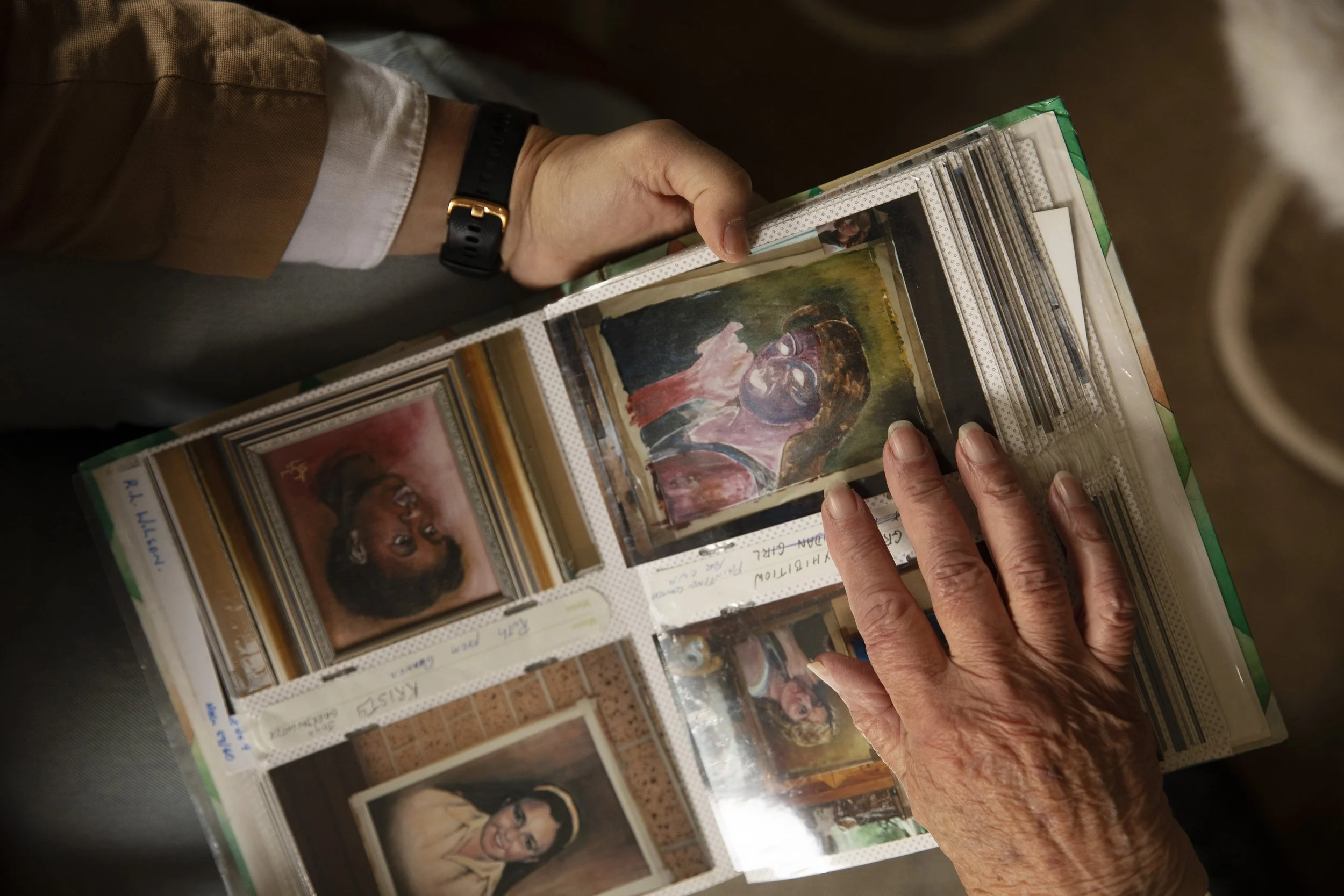
Jan shares an album documenting a lifetime of paintings with And Then. Bathurst, 2022.
The project is grounded in spending time with elders. In their rooms, their homes, their everyday spaces, listening to their stories and working together to create images that reflect their lives and experiences. These encounters are often incredibly moving, and they speak to why we do this work in the first place: to create space for stories that might otherwise go unseen, and to contribute to new narratives around ageing, isolation and connection. But alongside this, we have also had to navigate the realities of what a project can hold. Budgets and timelines require limits, even when the stories themselves do not.
Time and again, we have found ourselves wanting to include more people than the project was funded for. It can feel almost impossible to choose when every person brings something meaningful, when every story matters. If someone is willing to share their time, their home, their memories and their experience with us, how do we tell them that there is no space for them within the project?
There have been many instances where we have quietly extended the project to include additional participants. Sometimes a few more, sometimes many more.
On one level, these decisions feel completely aligned with the values of the work. We are making room. We are saying yes. We are refusing to let an arbitrary number determine whose story gets to be seen.
And yet, the consequences are real.
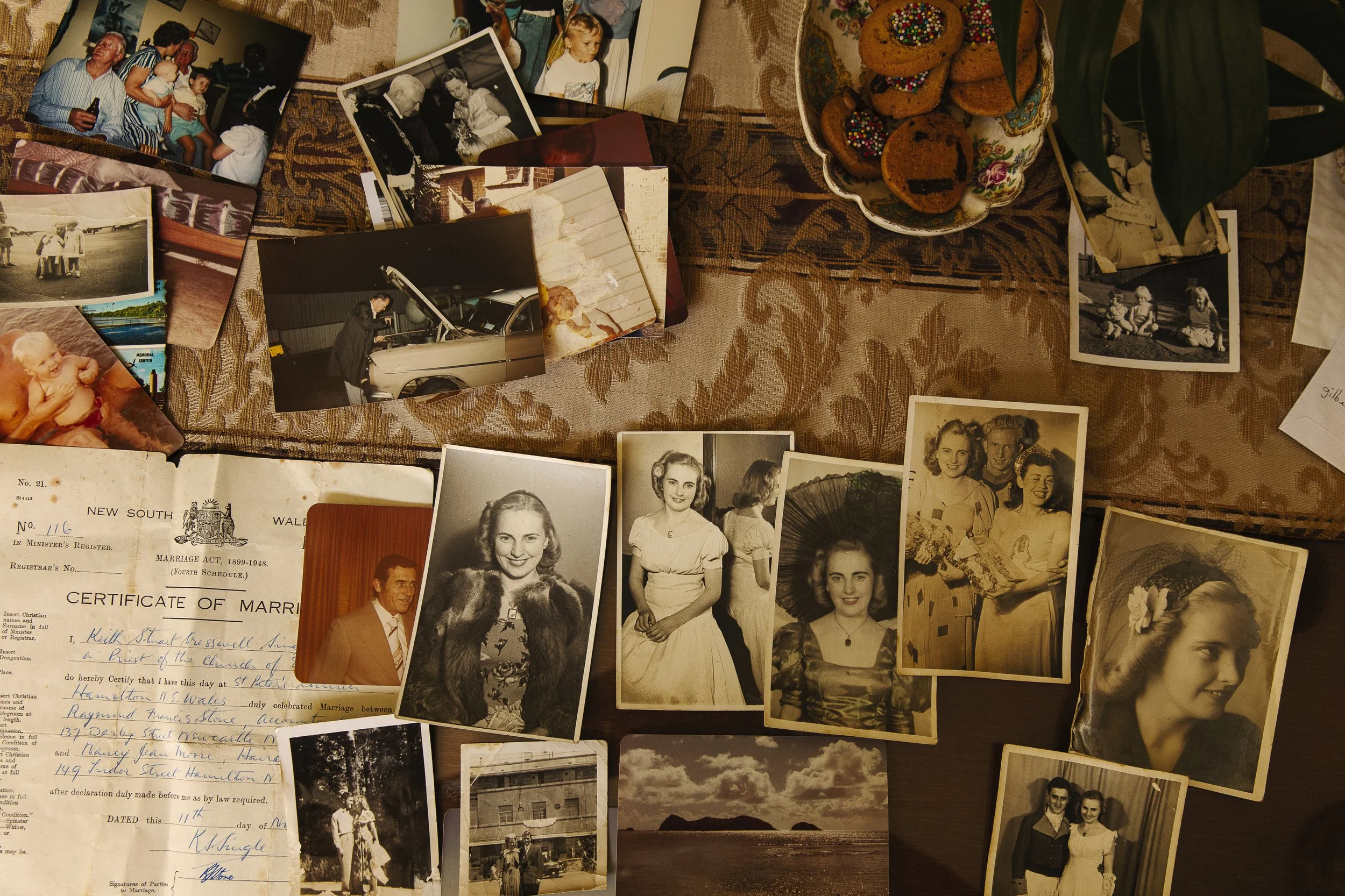
Memories and stories unfolding around Nancy’s table. Newcastle, 2021.
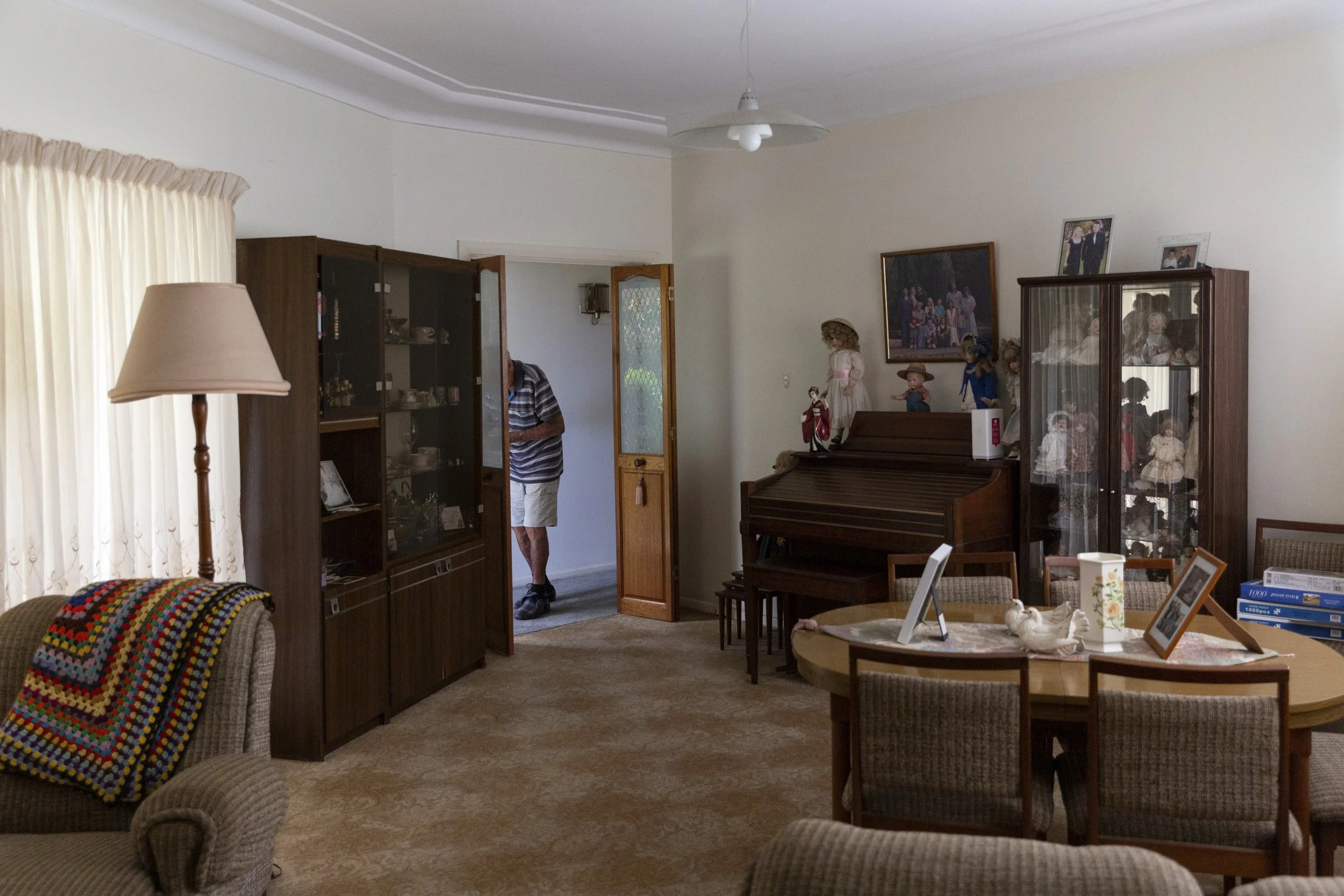
John’s living room. Redhead, 2021.
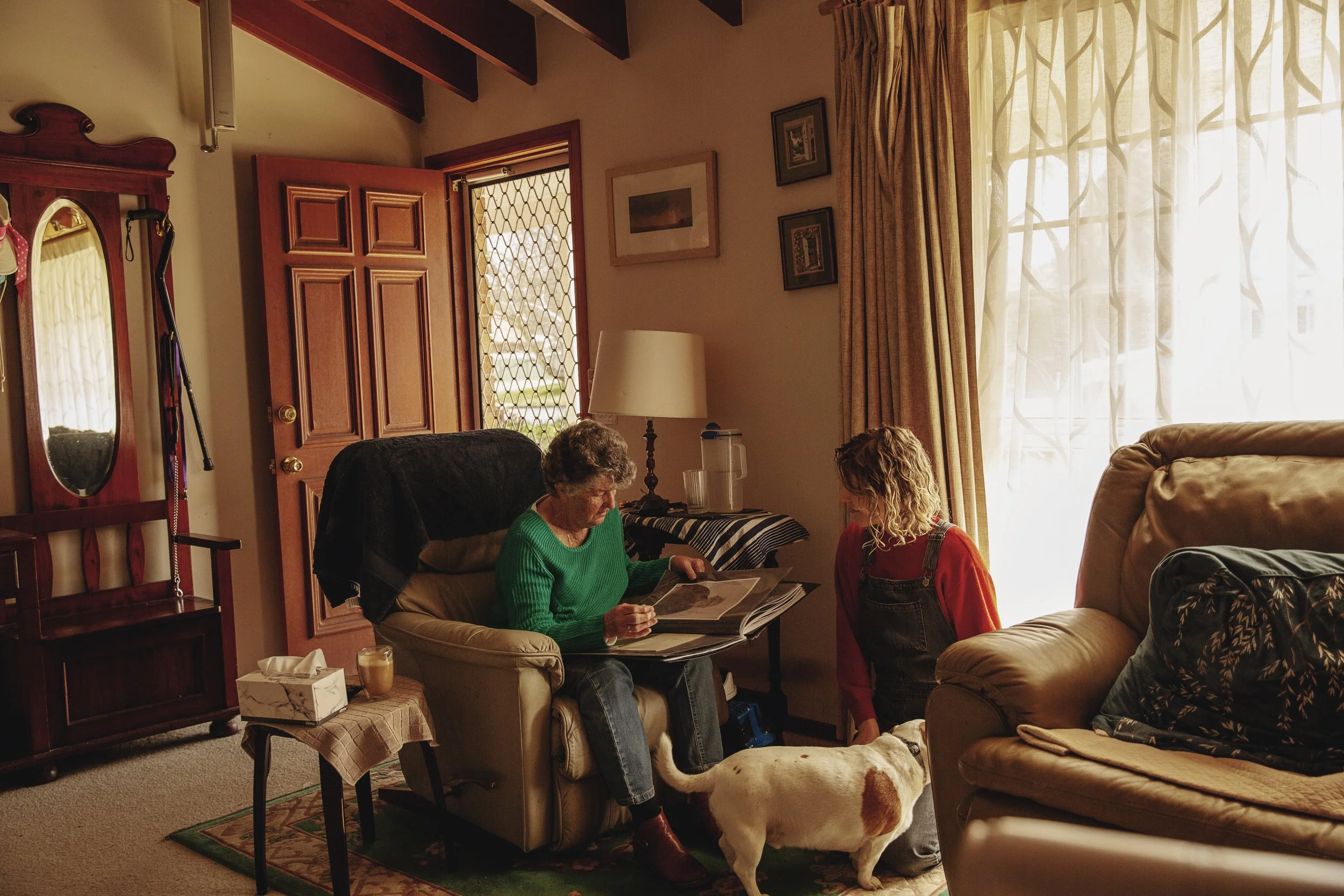
June and Hannah during ReConnect Bathurst, Bathurst, 2022.
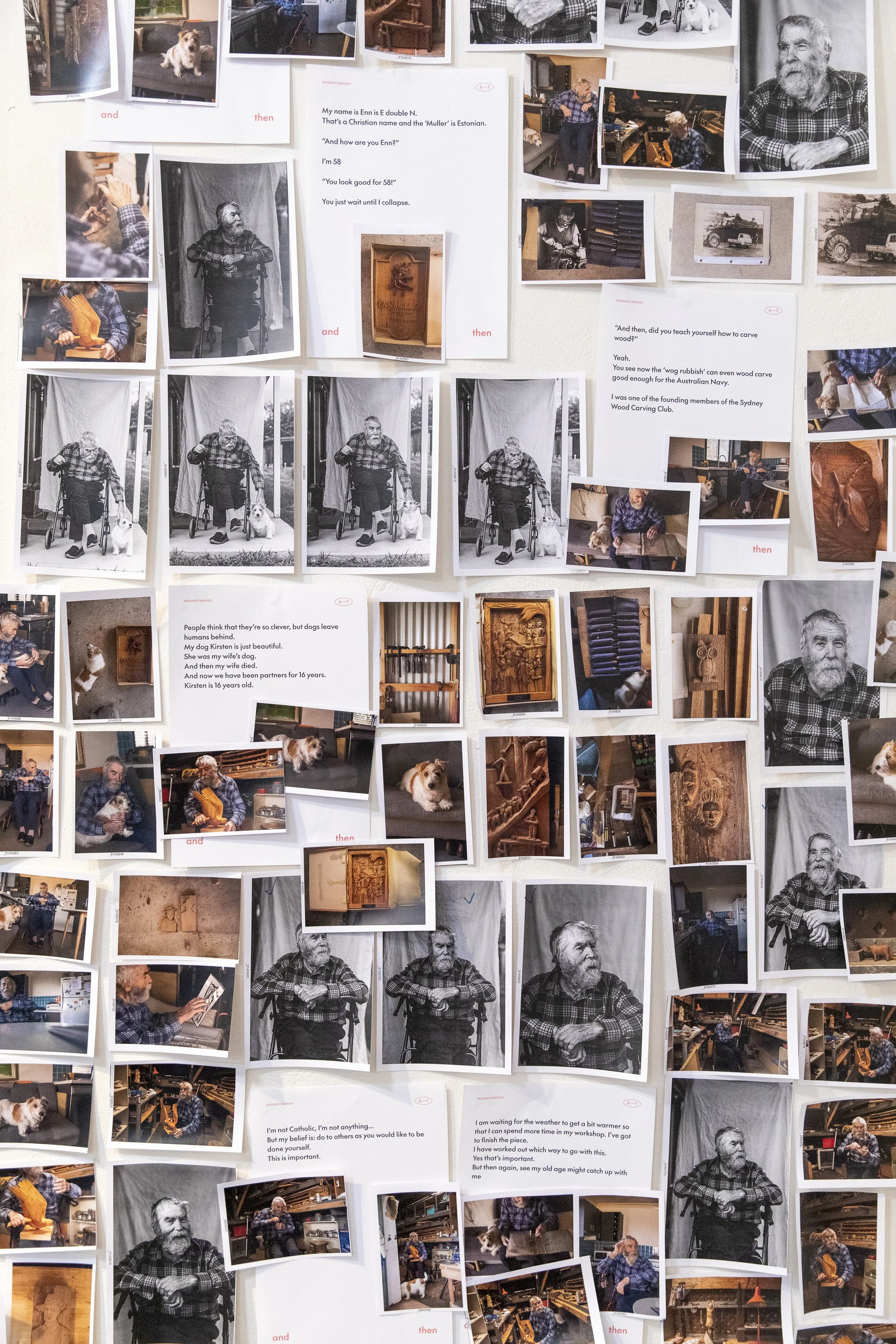
Close up of Enn’s storywall, where images and text are printed, arranged and edited collaboratively with participants. Bathurst Regional Art Gallery, 2022.
The scope of the work expands, often in ways that aren’t immediately visible. Each additional participant brings more time, more communication, more travel, more image-making, more editing, more relationships to care for. None of these things are necessarily problematic in themselves. The problem is that the additional time and energy required is rarely accounted for within the existing structure of the project.
The work is still meaningful.
The stories still matter.
The decision to include someone can still feel like the right decision.
And yet, when we stretch the container without support, the weight of that expansion doesn’t disappear. It simply shifts somewhere else.
Usually, it shifts onto us.
This is where the question of boundaries has become more complicated for us.
In the beginning, we were so immersed in the work, and so driven, that we rarely gave the right weighting to the boundaries we might need around it. Our attention was so often directed towards the people, the stories and the responsibilities we held that we sometimes overlooked what the work was asking of us. It was only when we found ourselves madly juggling family life, health and the edges of burnout, or feeling the quiet weight of having given more than we could realistically hold, that the need for boundaries became harder to ignore.
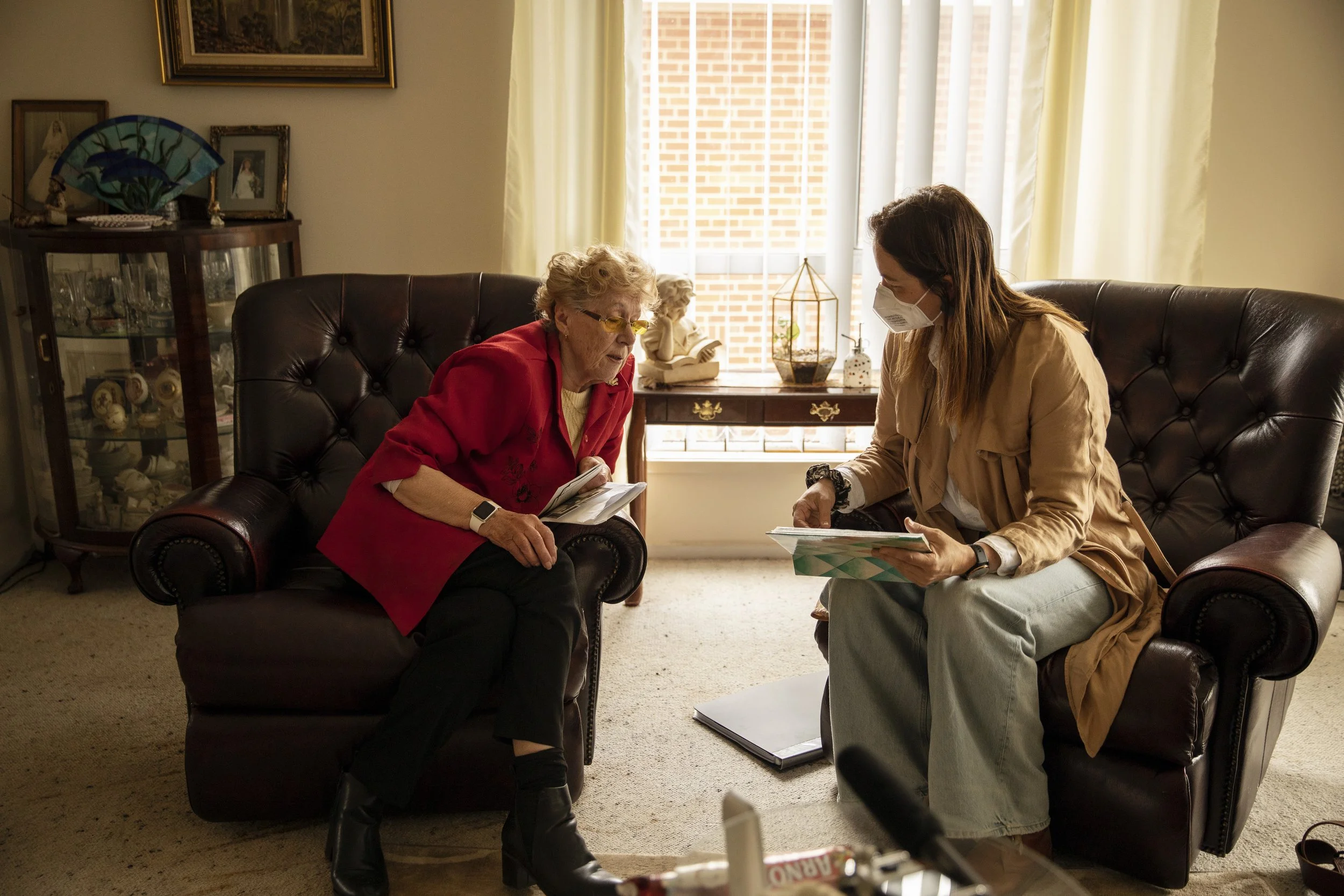
Jan and Melanie during ReConnect, Bathurst, 2022.

Enn and his dog, Bathurst, 2022.

Don’s Gratitude List, Newcastle 2021.

Don’s self portrait, Newcastle 2021.
Perhaps we had always thought of boundaries as something fixed or restrictive, something that might limit the work or create distance. And in a practice built on relationships, that can feel particularly uncomfortable.
How do you tell someone that the project has reached its limit when the relationship doesn’t necessarily feel finished?
How do you hold space for someone's story without feeling responsible for everything that follows from hearing it?
How do you enter and exit people’s lives with care?
And how do you say no to more work when the reason you want to say yes is because you care?
These questions become particularly nuanced in socially engaged practice because the boundaries are rarely only professional ones.
Within funded projects, we have navigated shifting scopes, tight budgets, and expectations that evolve over time. There can be a subtle pressure to over-deliver, especially when funding is difficult to secure and the work feels important. We’ve experienced scope creep (and scope leap), last-minute changes, and requests that extend beyond what was originally agreed. It can be difficult to respond with clarity when there is a sense that pushing back might risk the project or future opportunities.
But the personal layer is just as significant: the accumulation of late nights, extended timelines, and the gradual blurring of the edges between work and life. These moments don’t always feel significant in isolation, but over time they can reshape the way we move through both our practice and our personal lives.
We are still learning how to navigate this.
Perhaps what we are learning is that care needs a container.
Not because the care is limited, but because we are.
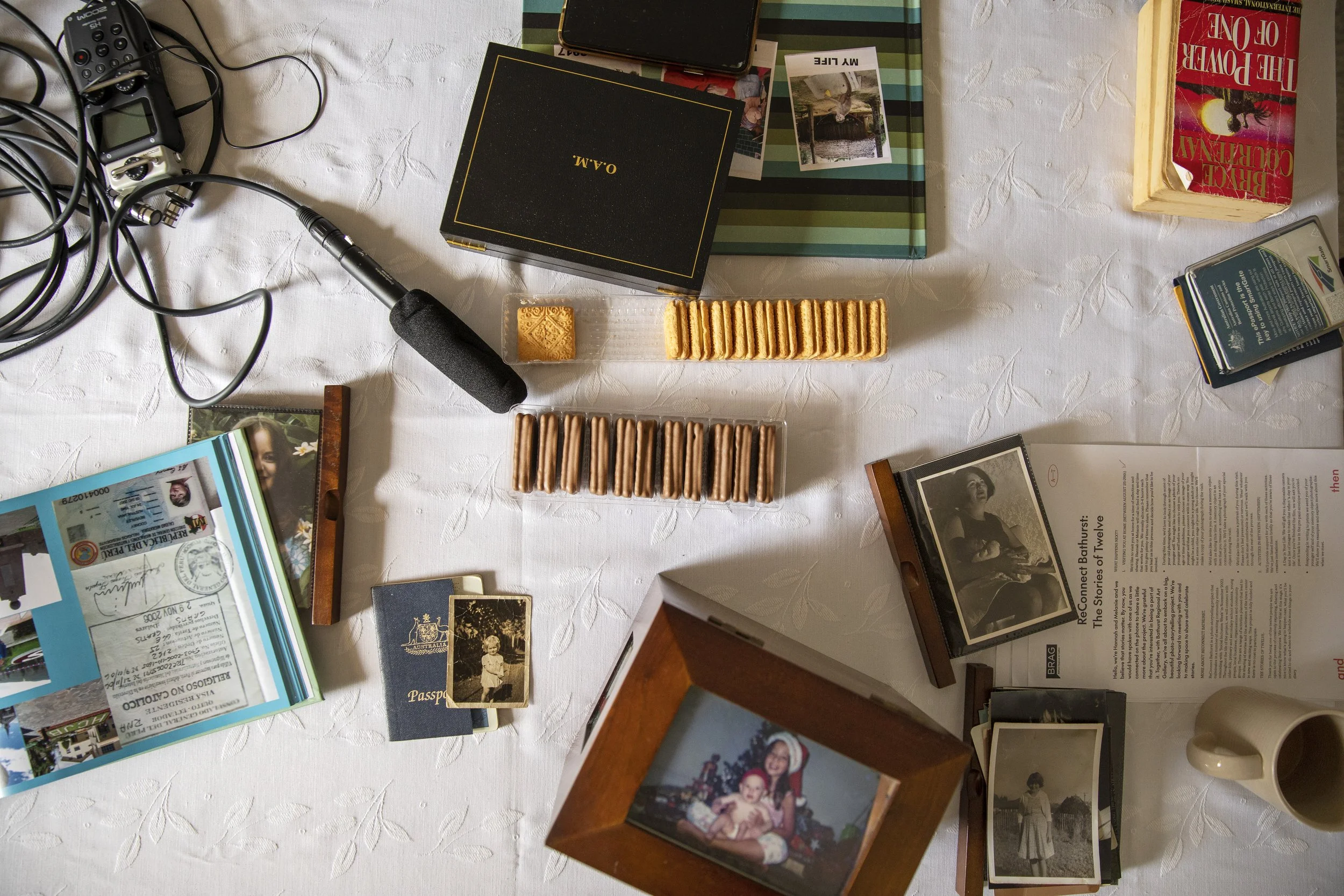
Biscuits, tea and stories, Bathurst, 2022.
This has changed how we think about boundaries. We no longer understand them simply as restrictions on what the work can be. Instead, we are beginning to understand them as part of the process itself: a way of holding the work with integrity, so that it can exist without asking us to disappear inside of it.
A boundary is an act of care.
Not a closing, but a holding.
That doesn’t make saying no easy. And it doesn’t mean that every boundary will feel right, or that we will always get it right. Sometimes we will still stretch the container. Sometimes we will still say yes when perhaps we should have said no.
But we are becoming more attentive to what happens when we do.
Because the process is not only what happens within the workshops or the images that are created. It is also the infrastructure that makes those things possible: the budgets, timelines, relationships, energy and capacity required to sustain the work over time.
To care for the work, then, might also mean caring for what holds it.
And perhaps that is the contradiction we are still sitting with: sometimes the most caring thing we can do is make a limit. Not because a story matters less, or because a person matters less, but because care that has no boundaries can eventually become care that cannot be sustained.
We are still learning how to hold care and boundaries alongside one another, rather than seeing them as opposing forces. How to build processes that support both the work and the people making it. How to recognise when something needs to be reshaped, paused, or said no to, even when it feels uncomfortable to do so.
And how to trust that this, too, is part of the practice.
Perhaps this is something to return to, gently, as your own practice evolves: What is holding your care, and how is that being supported within the process of your work?

StoryWall, Newcastle 2021.